Bay City, and the permit line between a repair and new work
Bay City publishes the one piece of permit text in this region that actually answers the question a drainage contractor raises.
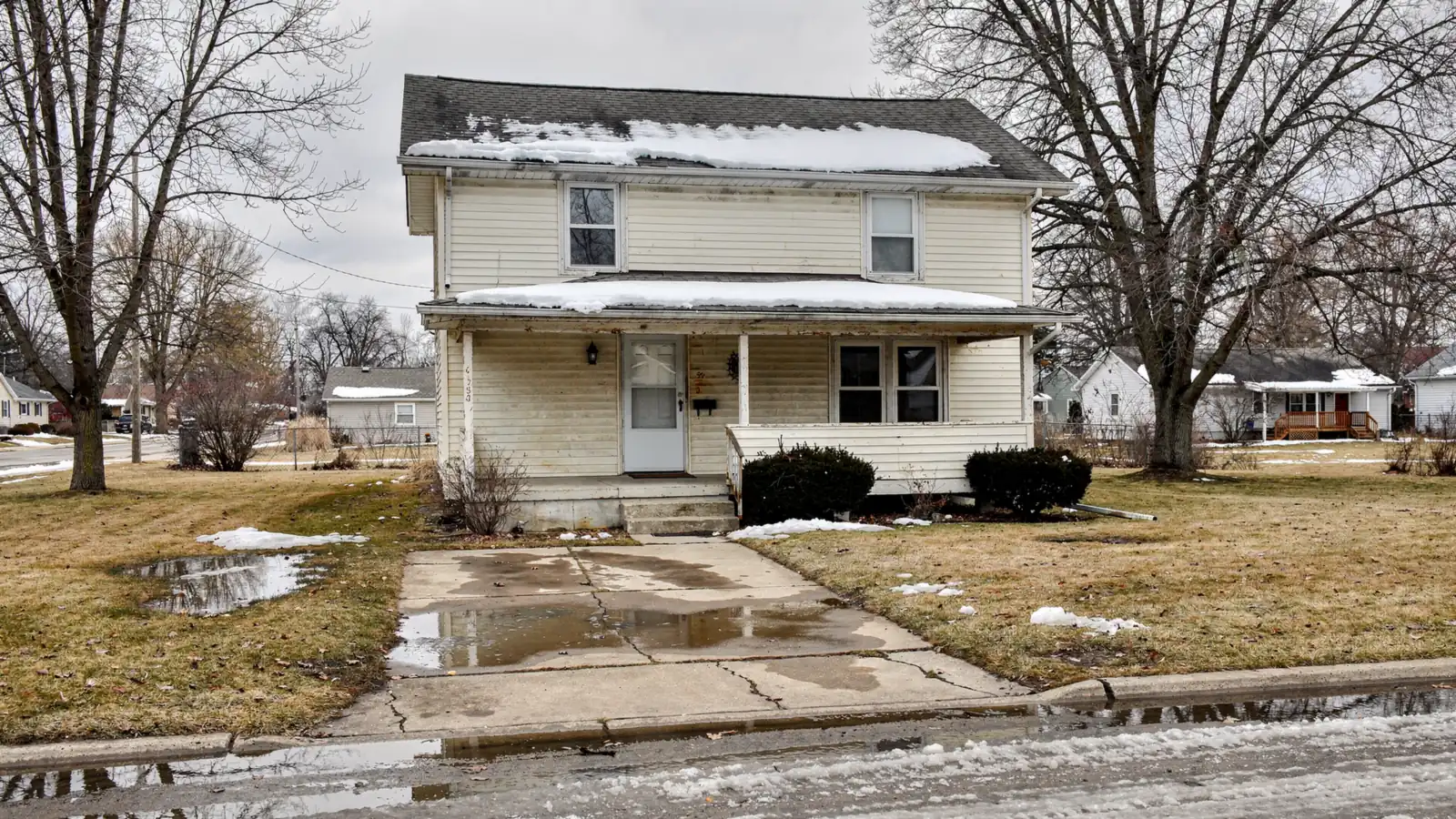
Ask three contractors in this region whether a basement drainage retrofit needs a permit and you will get three answers. Bay City is the only municipality here that has published text which settles it, and the text is in the plumbing section rather than anywhere you would think to look.
The rule, and why it is the useful one
Among the work the city lists as exempt from a plumbing permit is the stopping of leaks in drains, water, soil, waste or vent pipes, and the cleaning of stoppages or the repairing of leaks in pipes, valves or fixtures where nothing is replaced or rearranged.
Then the qualifier that answers the real question: if a concealed pipe becomes defective and has to be replaced, the work is considered as new work and a permit shall be obtained.
Apply that to a wet basement. Rodding out a blocked line is a repair and is exempt. Cutting the floor, taking out a failed buried drain and laying a new perforated line to a new pit is replacement of concealed pipe, and on the city's own wording that is new work needing a permit. Any contractor telling you the job is permit free in Bay City is disagreeing with the city's published position, and it is reasonable to ask them to explain that in writing.
The building permit exemption list is separate and also published: one storey detached structures under 200 square feet, fences not exceeding seven feet, retaining walls four feet or less unless supporting a surcharge, sidewalks and driveways not more than 30 inches above adjacent grade, and interior finishes. The retaining wall entry is the one that bears on drainage work, because a scheme that involves terracing or regrading a sloped yard can cross it without anybody thinking of it as a wall.
The department sits at 301 Washington Avenue, Suite 211, on 989-894-8162, open eight to five. Community Development is in Suite 207 and Planning and Zoning is on 989-894-8180.
The ground here is perched, not just wet
Bay County is largely Tappan soils, and the official series description is worth reading carefully because it is not the same story as the city of Saginaw.
Tappan is poorly drained, formed in calcareous loamy till over dense calcareous loamy till, on wave worked till plains and water lain moraines. The key line is the water table: the top of a perched seasonal high water table ranges from about six inches above the surface to ten inches below it, between December and April. Conductivity is moderately high to moderately low in the upper horizons and very low in the dense till beneath. The series covers around 265,000 acres in this part of the state.
A perched table means the water is sitting on top of a layer it cannot get through, close to the surface, rather than being the top of a deep saturated zone. Practically, that water is arriving laterally through the upper soil as much as it is rising, and it can be intercepted higher up. It also means that surface work, grading, and where roof water is put, matter more here than they do on the lake plain clays, without being the whole answer.
The season is also sharp. Above the surface in December through April, gone by summer. A basement that is wet only in that window, in this part of the county, is behaving exactly as the soil survey predicts.
What tends to be the right work
With a perched table and a dense layer below, interior drainage still does the heavy lifting on an existing house, because it deals with what reaches the slab. But the case for attending to grading, downspout discharge and any low spot that holds water against the wall is stronger here than in the city of Saginaw, where the water table is the dominant term and surface work changes less.
The older housing stock, with a 70.1 percent owner occupied rate and a median owner occupied value of 97,600 dollars, tends to mean stone or block foundations in the oldest parts of town, where crack and joint work reads differently from a poured wall. Establishing which you have is the first thing any competent visit does.
Questions people ask
- Do I need a permit to have drain tile put in?
- The city does not publish a line saying waterproofing needs a permit, and neither does anybody else in this region. What it does publish is the plumbing exemption list, which distinguishes cleaning a stoppage or repairing a leak, both exempt, from replacing concealed pipe that has become defective, which it states is considered new work requiring a permit. A retrofit drainage system with a new pit and a new discharge is comfortably on the new work side of that line.
- What else is exempt here?
- The city lists one storey detached structures under 200 square feet, fences not over seven feet, retaining walls of four feet or less unless supporting a surcharge, sidewalks and driveways not more than 30 inches above adjacent grade, and interior finishes. Note the retaining wall qualifier, which matters if a drainage scheme involves regrading a sloped yard.
- Why is the water table here different from Saginaw?
- Bay County sits largely on the Tappan series, which is a perched table rather than a deep one. The official soil description puts the top of the seasonal high water table between six inches above the surface and ten inches below it from December to April, over dense till with very low conductivity. Water perched above a dense layer behaves differently from water rising in a lake plain clay, and it responds better to interception than to deep drainage.
Where these numbers come from
- Building Department address, telephone and hours (City of Bay City, checked 24 September 2026)
- Permit exemptions and the concealed pipe replacement rule (City of Bay City, Do I Need a Permit, checked 24 September 2026)
- Tappan series, perched water table and dense till (USDA NRCS Official Series Description, checked 24 September 2026)
- Population, owner occupancy and median home value (US Census Bureau QuickFacts, checked 24 September 2026)
Last checked 24 September 2026.