Wet basements in the city of Saginaw
The city where the footing drain rule runs opposite to almost every other piece of advice you will read.
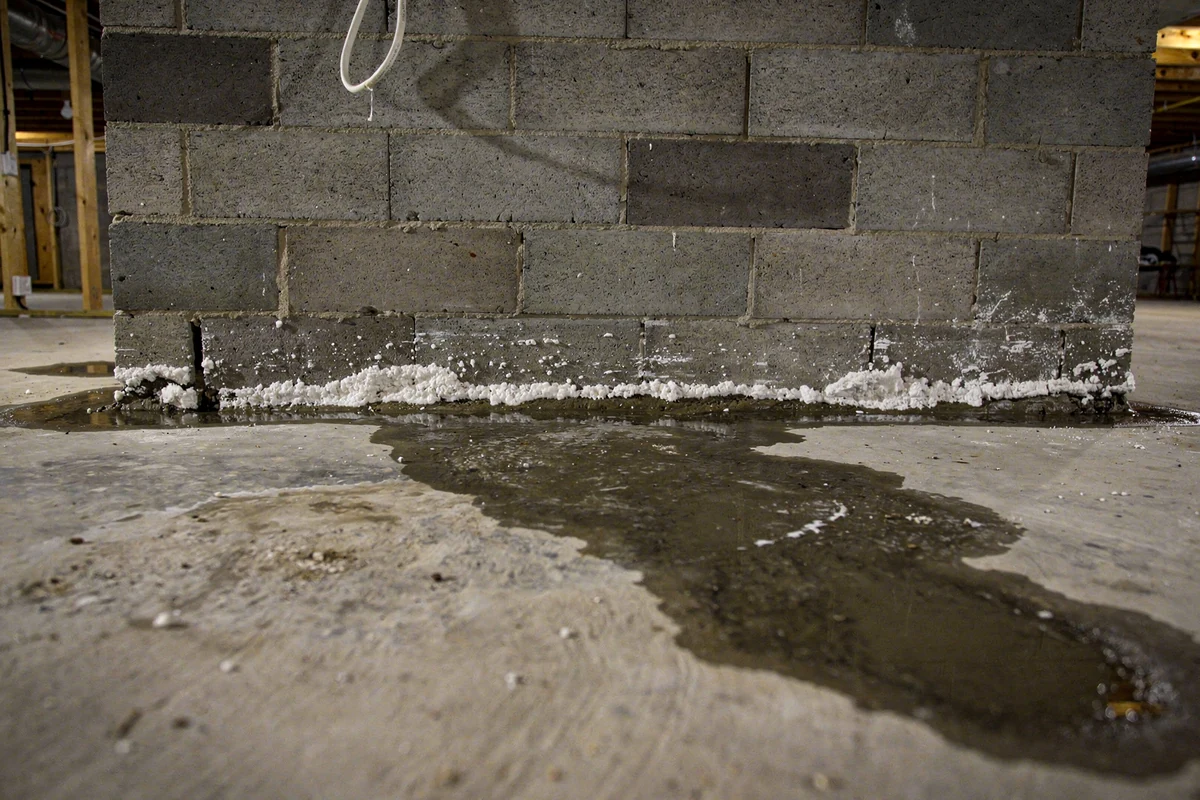
If you have read anything at all about basement water, you have read that clean water must never go into a sanitary sewer. In the city of Saginaw that advice is, for one specific pipe, wrong.
The exception that sits in the middle of the rule
The city's sewer ordinance states that stormwater and surface drainage shall not be discharged directly or indirectly into a public sanitary sewer, and then continues in the same sentence to except any footing drain tile from which roof and surface drainage is excluded, which may be connected to so discharge its flow. The provision carries a 1958 ordinance citation and remains in the current codification of the city code.
Read the condition carefully, because it is doing the real work. The exception only covers a footing drain that roof and surface water are kept out of. A footing tile with a downspout feeding into it is not within the exception at all.
Why so many connections fail that condition
The companion section prohibits roof and stormwater connections outright. In combined sewer areas it is unlawful to directly connect eaves troughs and roof downspouts to the treatment works, and the compliance deadline for residential property was 26 September 2002, with commercial and industrial following in 2006. In the separated sewer areas the prohibition is flat, with no deadline language at all because there was nothing to phase out.
The ordinance's own wording tells you something useful about the city: it distinguishes combined from separated sewer areas, and it refers to combined sewer overflows and to compliance with the discharge permit. Saginaw has both kinds of system, in different parts of town, and which you are on changes the answer.
The exemption route exists too. A user may apply to the Director for an exemption on a showing that disconnection is not cost effective for reducing overflows or maintaining permit compliance. That is not a form most homeowners will ever file, but its existence is worth knowing if a contractor tells you disconnection is compulsory in every case.
The lateral, and the fifty year rule
The provision that catches people financially is the one about the connection itself. The property owner maintains the sewer connection from the mainline to the property line, and bears all cost of investigation, repair and replacement. Then the sharp part: no investigation is carried out on connections aged fifty years or more. A new connection is required instead.
Given when much of the city's housing was built, a homeowner with a suspected lateral problem may find the question is not whether to investigate but how quickly to budget for replacement. Work of that sort needs a written permit from the City Engineer.
For a basement that floods through the floor drain rather than seeping at the walls, this is frequently the actual story, and it is not a waterproofing job at all. Spending on a perimeter drainage system when the problem is a collapsed lateral is a common and expensive mistake.
The ground under the city
The city sits on the lake plain at the confluence that gives the river its name, with 6,060 square miles of watershed draining past it. The soils are the heavy, poorly drained clays and loams of the valley floor. The practical consequence for a basement is a seasonal water table close to the surface for much of the year, which is dealt with by interior drainage far more often than by digging.
Getting hold of the city
The Inspections Division is at 1315 S. Washington Avenue. Building and plumbing permit applications are separate forms. At the time of writing, the city's own website was not reachable from here, so the published telephone number, counter hours and fee schedule are not repeated on this page rather than guessed at. That is worth a call before you plan around a fee.
Contractors working in the city need the Michigan maintenance and alteration licence in the right craft like anywhere else in the state, and the licence page covers how to confirm it. If your neighbours in the township have quoted you a permit figure, note that the township publishes one and the city does not, so their number will not be yours.
Questions people ask
- So can I leave my footing drain connected to the sewer?
- In the city, the ordinance permits it as long as roof and surface drainage are excluded from that tile. That is a narrower permission than it first sounds, because a great many older connections have a downspout feeding into them somewhere, and that takes the arrangement outside the exception and into the prohibition.
- What is the risk if my downspouts still go into the ground?
- The chapter's penalty schedule for a municipal civil infraction runs from not less than 1,000 dollars per day, rising for repeat offences within 90 days. More practically, roof water in a footing drain is a large volume arriving fast, which is the water most likely to overwhelm whatever is downstream of it and come back at you through a floor drain.
- My sewer lateral is old. Who pays?
- The city's ordinance puts maintenance of the connection from the mainline to the property line on the property owner, with all investigation, repair and replacement cost borne by the owner. It also provides that no investigation is performed on connections 50 years or more old, a new connection being required instead. A written permit from the City Engineer is required for the work. On a housing stock of Saginaw's age that is a live issue rather than a theoretical one.
Where these numbers come from
- Sanitary sewers and the footing drain tile exception, section 51.006 (American Legal Publishing, City of Saginaw Code, checked 24 September 2026)
- Roof and stormwater connections prohibited, section 51.027 (American Legal Publishing, City of Saginaw Code, checked 24 September 2026)
- Penalty schedule, section 51.999 (American Legal Publishing, City of Saginaw Code, checked 24 September 2026)
- Sewer connection investigation, section 51.007 (American Legal Publishing, City of Saginaw Code, checked 24 September 2026)
- Population, owner occupancy and median home value (US Census Bureau QuickFacts, checked 24 September 2026)
Last checked 24 September 2026.