Sump pumps, and where the water is allowed to go
The pump is the easy part. The discharge is where the local rules live, and they are not the same in Saginaw as in Midland.
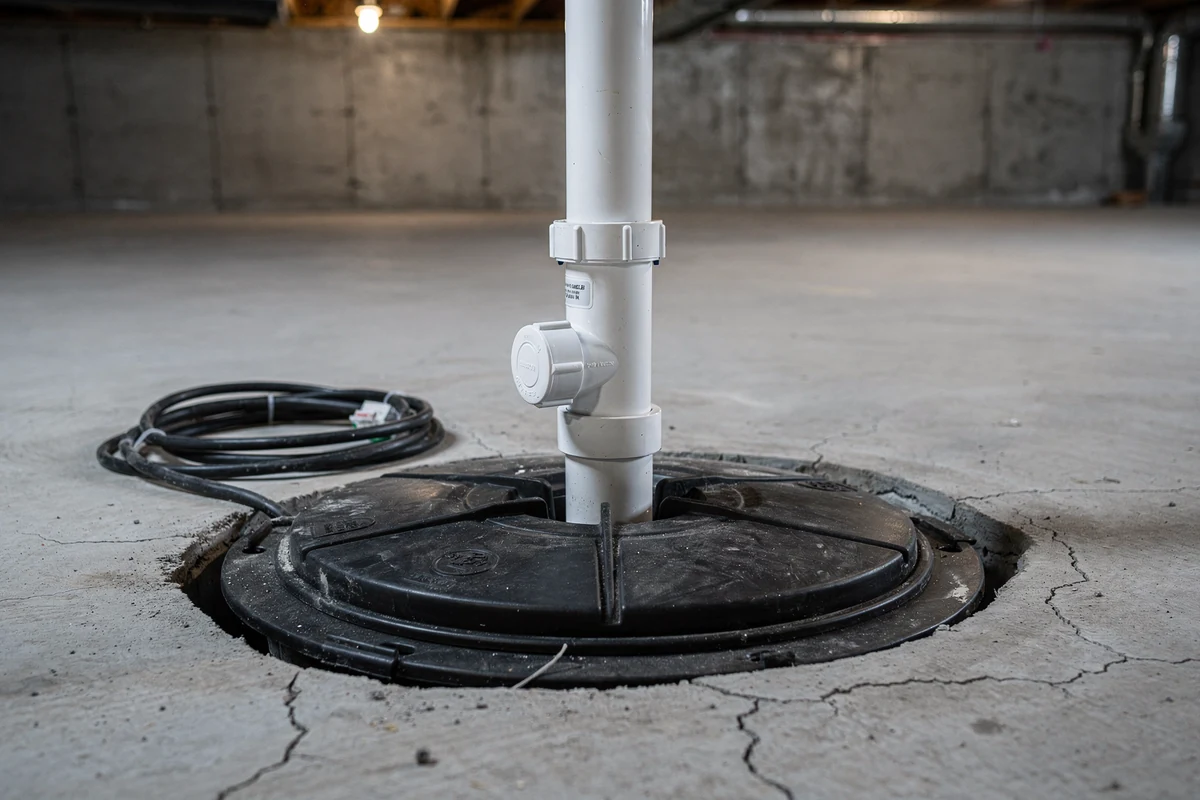
A sump pump is a simple machine in a hole. Choosing one is not where people go wrong in this valley. Where they go wrong is the pipe leaving the house, because in the Great Lakes Bay region the rules about where that water may go are genuinely local, genuinely different between neighbouring cities, and almost never mentioned in a quote.
What the state says
Michigan EGLE published guidance for residents on residential sump pump discharges in January 2022, and it sets a clear order of preference. First choice is to discharge to the ground somewhere it can infiltrate. Second is a storm sewer, and that one comes with a condition attached: with permission from the owner or operator. Sending sump water straight to lakes, rivers, streams and wetlands is not recommended. Discharges from floor drains to storm sewers or surface waters are not authorised at all.
EGLE adds a caution worth repeating, because basements in this region are often also workshops: if the basement floor drains are connected to the sump, then anything spilled on that floor leaves the building with the water, and that can contaminate ground.
What your own city says, which is not the same thing
Here the region splits, and it is the single most useful thing on this site.
In the City of Saginaw, the sewer ordinance prohibits stormwater and surface drainage from going into a public sanitary sewer, and then carves out one exception in the same breath: a footing drain tile from which roof and surface drainage is excluded may be connected to discharge its flow. That language dates from a 1958 ordinance and survives in the current codification. Separately, roof downspouts connected to the treatment works were to be disconnected by 26 September 2002 for residential property in the combined sewer areas, and are flatly prohibited in the separated areas.
In the City of Midland, the same footing drain connection is what the Footing Drain Disconnection Program exists to remove, redirecting that clean water to the storm sewer instead. Eligibility runs to homes built before 1988, with footing drains connected to the sanitary sewer and no sump pump already installed, and the city has identified some properties as mandatory while others volunteer. The programme came out of a 2017 sanitary and storm sewer study that recommended more than 30.5 million dollars of work, and it is targeted particularly at the Whitewood and Moorland pumping districts.
Two cities, twenty miles apart, on the same river system, with opposite answers. Note also that a footing drain and a sump discharge are not the same pipe, and a house can have one without the other. Establishing which you have, and where each one currently goes, is the first job.
Siting the pit
The pit wants to be at the low point of whatever drainage exists, which is not always the corner with the most room. On a retrofit alongside interior drain tile the channel sets the fall and the pit follows it. It should be a sealed pit with a proper cover rather than an open hole, both because an open sump is a humidity source and a radon path, and because things fall in.
A check valve stops the lifted column of water falling back into the pit every time the pump shuts off, which otherwise makes the pump cycle twice for every real cycle and roughly doubles the wear. Discharge pipe should run far enough from the wall that the water is not simply making its way back to the drain it came from. In clay this is further than people think, because the water will not soak away quickly where it lands.
The frozen discharge problem
This is a local failure mode and it is worth designing for rather than discovering. A discharge line running across a lawn in a valley averaging 49 inches of snow a year, with long spells below freezing, will freeze at the outlet if it is laid flat or allowed to hold water. The pump then runs against a closed pipe, which is how a pump burns out in February. Options are a buried line below frost with a proper outlet, a fall steep enough that the line self drains, or an above ground arrangement that is pulled and stored seasonally.
Ask whoever quotes what happens to the discharge line in January. It is a fast way to tell who works here from who is passing through.
Cost, and what changes it
Trade sources put installation or replacement at roughly 1,200 to 2,500 dollars including pit excavation and electrical, with a wider 1,500 to 4,500 dollar range once battery backup is in the picture. Those are national and Southeast Michigan figures respectively, and the cost page keeps them labelled. What moves the number locally is whether a pit already exists, whether a new circuit is needed, and how far the discharge has to travel to somewhere it is allowed to be.
Which municipality you are in decides that last one. The town pages are organised around exactly that question.
Questions people ask
- How long does a sump pump last?
- Less than people expect, and much less in ground like this, because a pump in the Saginaw lowlands runs for months at a time rather than during storms. Treat it as a wearing part with a service life, keep the original paperwork, and replace it on a schedule rather than at three in the morning in March. A pump that has started cycling every couple of minutes is telling you something about the water table, not just about itself.
- Is a battery backup worth it?
- In a valley where a high water table and severe weather arrive at the same time of year, a pump with no power is a pump with no purpose, and the outages here tend to come with the storms. The trade price gap between a plain installation and one with battery backup is roughly the difference between the bottom and the top of the quoted range. Whether that is worth it depends mostly on what is in the basement.
- Can I run the discharge into the street or the ditch?
- Not without checking. Michigan EGLE's guidance is that sump water should ideally soak into the ground on your own property, that a storm sewer is acceptable with the permission of the owner or operator, and that sending it directly to lakes, rivers, streams and wetlands is not recommended. Work in a road right of way or a county drain is a permit matter in its own right. The town pages list who to ask.
- My floor drain backs up. Is that the same problem?
- No, and the difference matters. Water rising out of a floor drain is coming from the sewer side, not from the water table, and a sump pump will not touch it. Midland's own record of the June 2017 event describes basement sewer backups affecting thousands of residents. That is a sewer capacity problem and the response to it is different, including the question of whether clean water from footing drains and downspouts is overloading the system in the first place.
Where these numbers come from
- Residential sump pump discharge guidance, January 2022 (Michigan EGLE, checked 24 September 2026)
- Footing drain tile exception, City of Saginaw Code section 51.006(B) (American Legal Publishing, Saginaw Code of Ordinances, checked 24 September 2026)
- Footing Drain Disconnection Program eligibility and purpose (City of Midland, checked 24 September 2026)
- Sump pump and backup price ranges (This Old House and Mansour's Innovations, checked 24 September 2026)
Last checked 24 September 2026.